

Representation in Research Can Shape Better Healthcare
Hear Lee H. Moultrie discuss why community participation, trust, and representation matter in the future of health research.

Independent community advocacy page. In Our DNA SC is an official Medical University of South Carolina initiative. Lee H. Moultrie & Associates provides public education and community connections but does not operate the study or collect DNA, medical records, consent forms, or genetic results.
Official MUSC PageGenetic research designed to include more South Carolinians
In Our DNA SC is a community health research initiative focused on learning how DNA may influence health risks and how more representative research can support future medical discovery.
The initiative combines voluntary participation, genetic screening, and long-term research. Its broader purpose is to build knowledge that reflects the people and communities of South Carolina rather than relying on narrow or incomplete population data.
Anyone considering participation should review MUSC’s current eligibility, consent, privacy, sample-collection, and results information directly through the official program.
Review MUSC Project Information“It’s a walking billboard.”
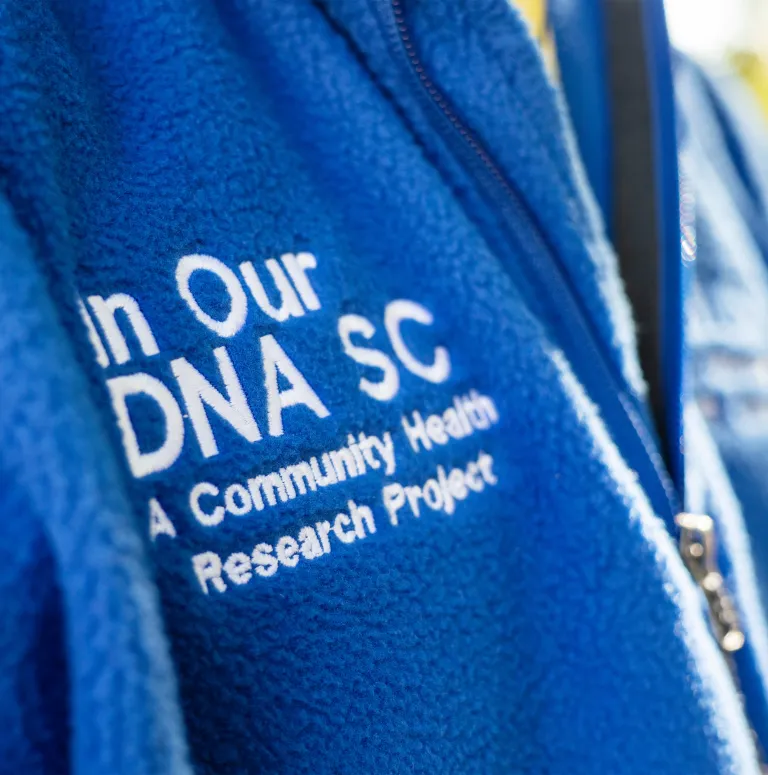
Lee used those words to describe wearing his bright-blue In Our DNA SC pullover while speaking with people and encouraging them to learn about the project.
Lee Moultrie, quoted by KFF Health NewsEnrollment vision
The project was created with a goal of enrolling 100,000 South Carolinians in population genetics research.
Adult participation
MUSC’s official materials describe the project as an adult research initiative. Visitors should confirm current requirements directly with MUSC.
MUSC enrollment
Consent, privacy review, sample instructions, medical information, and results are managed through MUSC and its official systems.
Lee Moultrie turns research into a community conversation
Lee is both a participant in the initiative and a community advocate. His role is to make the project visible, understandable, and easier to discuss with people who may never encounter it through traditional institutional outreach.
KFF Health News documented Lee carrying brochures in his vehicle, keeping information at the barbershop he visits, speaking with residents who noticed his jacket, and recommending stronger outreach through African American media, churches, and trusted community leaders.
His message is straightforward: research cannot fully serve a population when the data does not adequately reflect that population.
“We have new ideas. We have ways we can do this. We’ll get there.”
Lee’s approach is built around direct conversation, trusted messengers, and showing communities why their participation matters.
Lee Moultrie, quoted by KFF Health News
Connecting trusted community voices with health leadership
Lee’s work sits between institutions and the communities they are trying to reach.
That position matters. Research programs can publish information, send electronic messages, and hold events, but people often make health decisions only after speaking with someone they know, recognize, or trust.
Lee brings years of health advocacy, cancer survivorship, military service, and community engagement into those conversations while maintaining direct relationships across MUSC health and cancer initiatives.
Better representation helps reduce blind spots in medicine
KFF Health News reported that genomics research has historically relied heavily on DNA from people of European descent. When research participation is narrow, risk interpretation and future precision-medicine tools may work less effectively across different populations.
History cannot be ignored
Past research abuses, unequal treatment, and present-day bias influence whether communities trust health institutions. Honest answers and consistent relationships matter.
Digital outreach is not enough
Churches, barbershops, community events, local media, and direct conversations may reach residents who never respond to patient-portal messages.
Representation affects care
Broader participation can help researchers interpret inherited risks more accurately and build medical tools that are useful across more communities.
A clear path through MUSC
Review the project
Read the current eligibility, research, privacy, and participation information on MUSC’s official page.
Complete official consent
Use the MUSC enrollment system to review and electronically complete the required consent materials.
Follow sample instructions
MUSC provides the approved process and available options for submitting the required sample.
Receive official results
Eligible results and follow-up information are delivered through MUSC and its approved program partners.
Lee’s advocacy became part of a national genetics-research discussion
KFF Health News featured Lee in its April 25, 2024 report, “Genetics Studies Have a Diversity Problem That Researchers Struggle To Fix.”
The report followed Lee’s practical approach to outreach and examined the challenge of recruiting research participants who better reflect South Carolina’s population.
Before deciding whether to participate
Is this Lee Moultrie’s research study?
No. In Our DNA SC is an MUSC community health research initiative. Lee supports public education and outreach as a community advisory board member and participant.
Does this website collect DNA or medical information?
No. Lee H. Moultrie & Associates does not collect samples, research consent, medical records, or genetic results. Those activities are handled through MUSC and its approved systems.
Who can participate?
Eligibility requirements may change. Visitors should review the current requirements directly through MUSC before enrolling.
How is participant information protected?
Review MUSC’s official consent and privacy materials carefully. Those materials explain how information is stored, used, shared, protected, and withdrawn from future research.
Where do I register?
Registration and consent are completed through MUSC’s official system. Use the enrollment button below.
Help research better reflect South Carolina
Learn about the initiative, review the official consent and privacy information, and decide whether participation is right for you.