

Early Detection Changed His Life. Advocacy Became His Mission.
Lee H. Moultrie has spent decades helping men understand screening, ask better questions and connect with trusted health resources. His own prostate cancer journey made that work even more personal.
Why Lee Chooses MUSC Hollings Cancer Center
As a prostate cancer survivor and longtime healthcare advocate, Lee explains why prevention, trusted medical relationships and access to quality care matter.
In this featured Hollings Cancer Center video, Lee shares his personal perspective and encourages men and families to take screening, prevention and informed healthcare decisions seriously.
A screening conversation started decades of action
Lee’s advocacy began before his diagnosis. In a barbershop, he noticed a yellow bag asking whether he wanted to learn more about prostate cancer. He called the number on the bag, asked questions and began monitoring his PSA at age 39.
“Early detection saves lives.”
Lee’s message is not about fear. It is about giving men enough information to speak with their healthcare providers before a problem becomes a crisis.
Prostate cancer does not affect every community equally
MUSC Hollings Cancer Center reports a serious prostate cancer burden among African American men in South Carolina.
Most commonly diagnosed
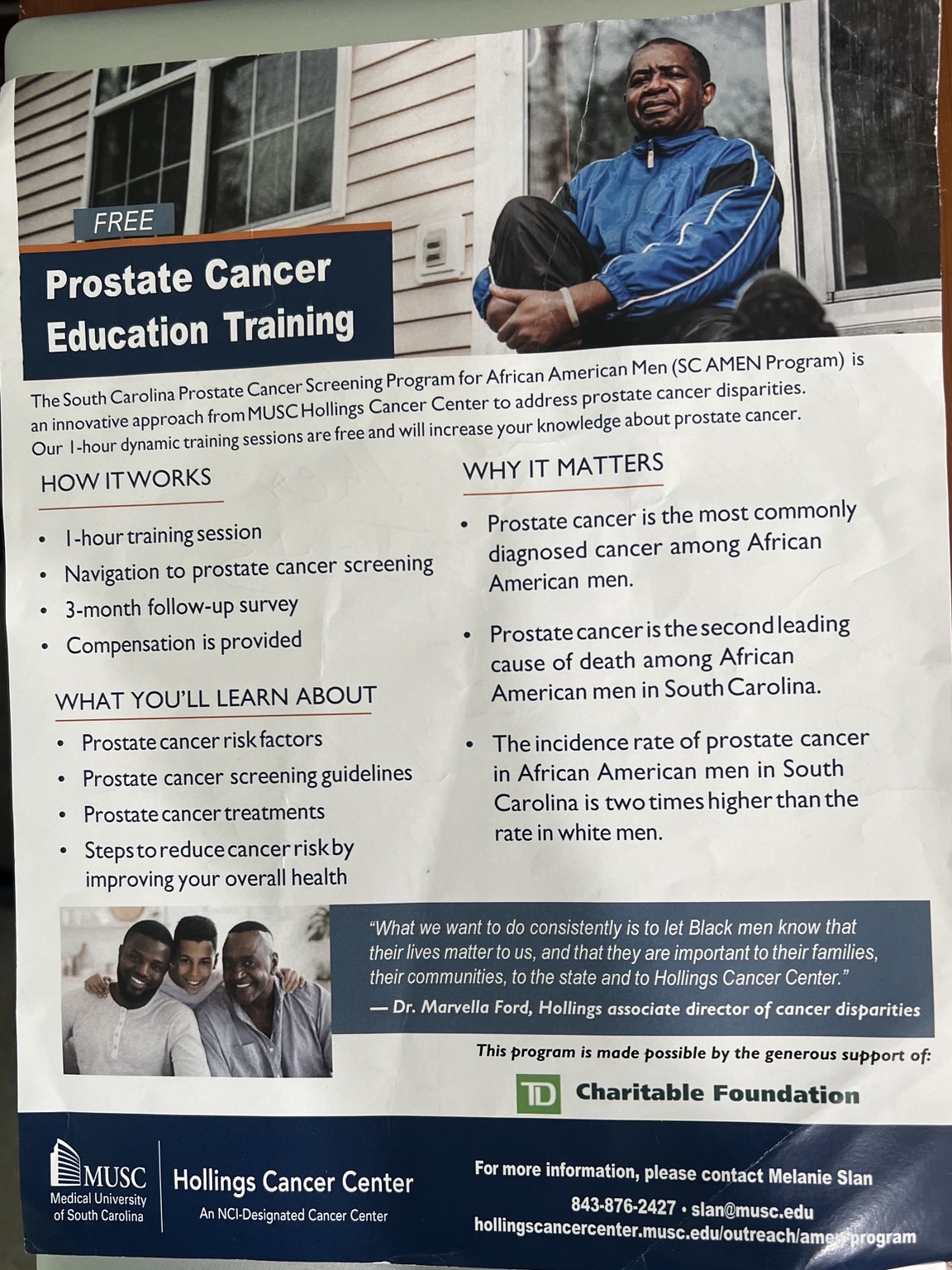
Prostate cancer is the most commonly diagnosed cancer among African American men in South Carolina.
Higher incidence
The incidence rate among African American men in the state is almost twice the rate among white men.
Higher death rate
The prostate cancer death rate among African American men is almost three times the rate among white men in South Carolina.
SC AMEN: education, navigation and follow-up
The South Carolina Prostate Cancer Screening Program for African American Men, known as SC AMEN, was created to address prostate cancer disparities through practical community support.
The program combines a one-hour education session with navigation to screening and follow-up. The goal is to help men understand risk factors, screening guidelines, treatment options and steps that may improve overall health.
Lee’s proton therapy treatment took place at UF Health
His treatment took place at the UF Health Proton Therapy Institute in Jacksonville, where he completed an outpatient treatment course in 2021.
He chose proton therapy after reviewing his options and considering quality of life. UF Health later featured his recovery and recognized his continued work as a patient ambassador promoting screening and treatment awareness.
Turning lived experience into useful information
Lee’s work is most effective when people leave with a clear next step.
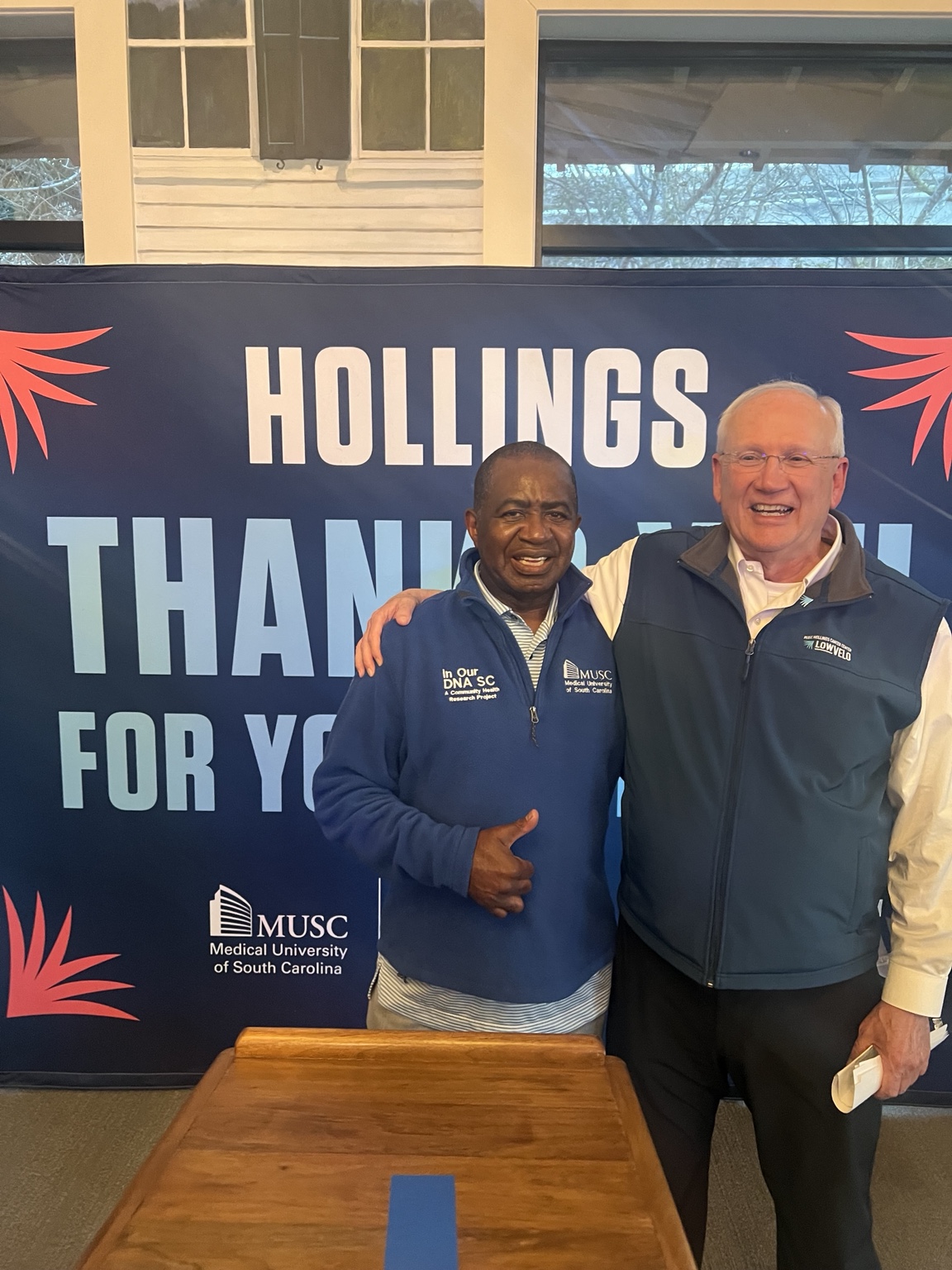
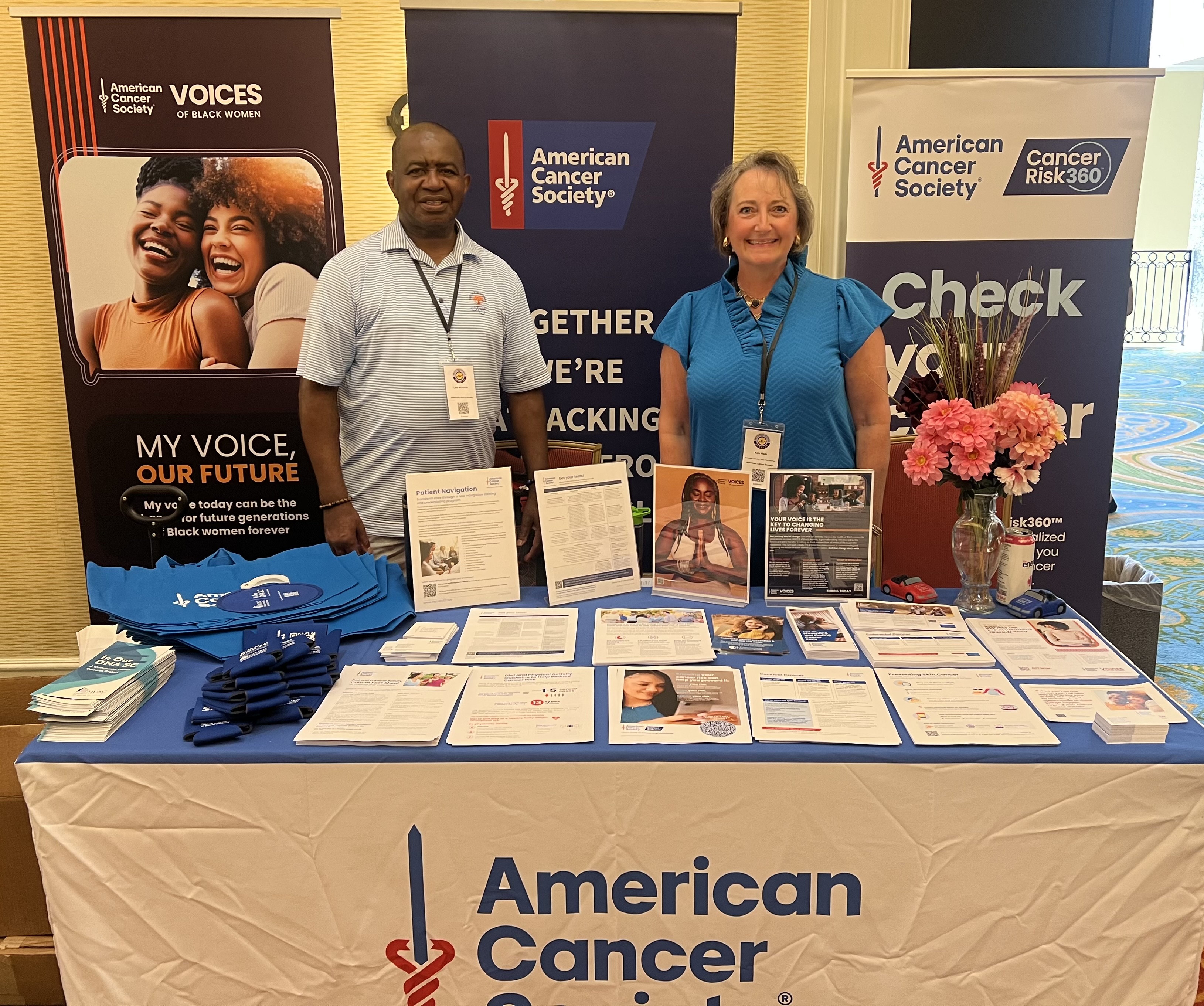
He brings cancer awareness into community events, churches, support groups, health programs, media interviews and direct conversations. His role is not to diagnose or recommend a treatment. It is to help people ask better questions and find credible resources.
Screening awareness
Encouraging men to discuss prostate health and screening with a qualified healthcare provider.
Community education
Bringing understandable information into trusted local spaces.
Survivor support
Sharing lived experience and connecting men with credible support networks.
Public engagement
Using speaking, media and advocacy to keep cancer prevention visible.
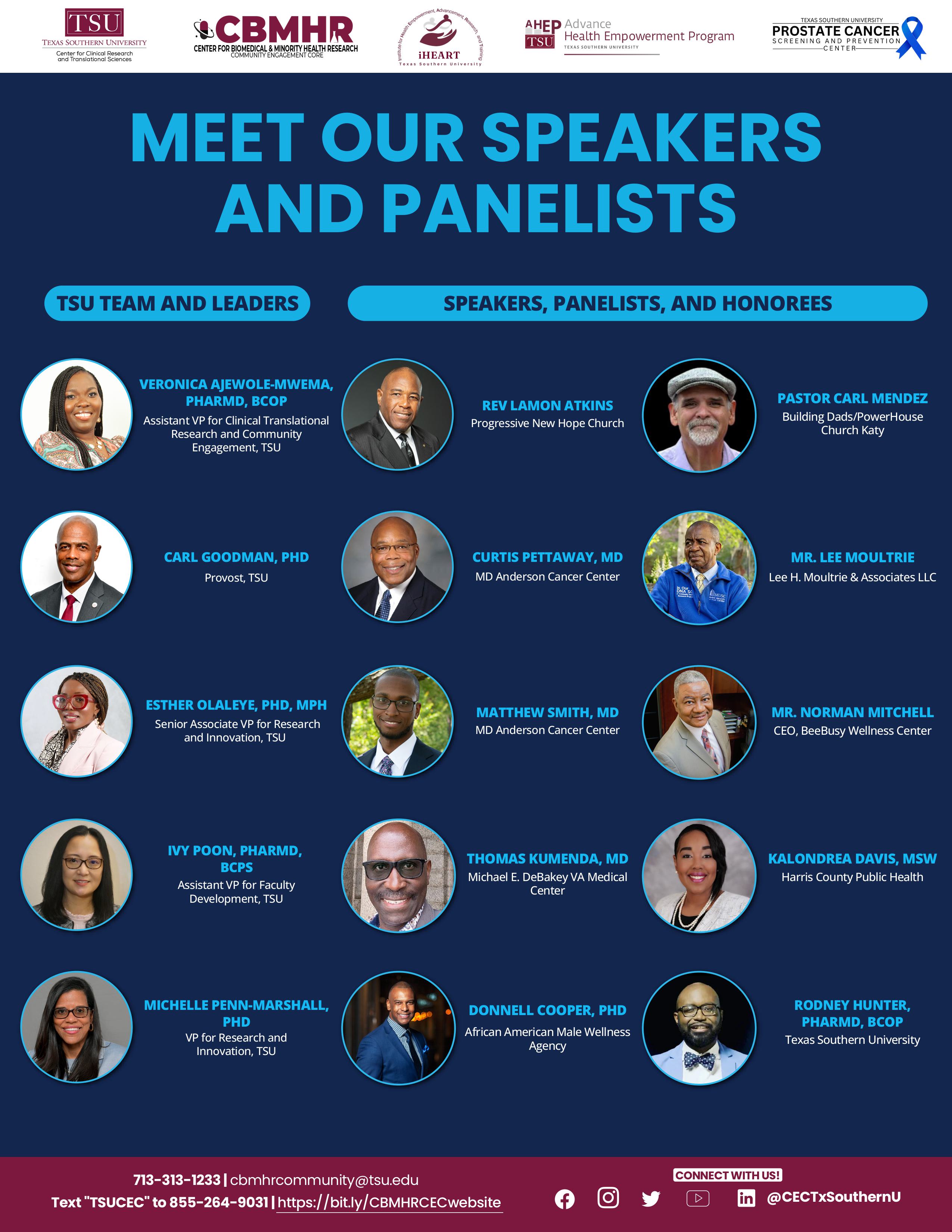
Texas Southern University Prostate Health Outreach
In September 2025, Lee served as a featured panelist and honoree at Texas Southern University’s fourth annual Face to Face, Shoulder to Shoulder: Let’s Talk About Prostate Cancer outreach event in Houston.
Lee shared his lived experience as a prostate cancer survivor, caregiver and community-health advocate alongside physicians, researchers, public-health professionals, faith leaders and fellow advocates.
This appearance provides documented evidence of Lee’s broader prostate-health leadership and his ability to work across university, healthcare, research and community settings.
Strength, movement and connection after prostate cancer
Lee participated in the inaugural MUSC Strength Camp, a 10-week wellness program created for prostate cancer survivors.
The program brought survivors together for exercise, nutrition education, behavioral health support and guidance around challenges that may follow prostate cancer treatment. For Lee, that work fits a larger message: surviving cancer should include building the strength, information and support needed to keep living fully.
Read more about Lee’s work and the programs behind it
Prostate cancer survivor urges Lowcountry men to make lifestyle changes
Lee discusses screening, healthier living and his outreach through MUSC’s SC AMEN project.
Read the story →Thriving and advocating after treatment
Lee shares how early screening, treatment and recovery shaped the next chapter of his advocacy.
Read the story →SC AMEN prostate cancer screening program
Official information about education, navigation and follow-up for African American men in South Carolina.
Visit the program →Lee H. Moultrie’s advocacy profile
A look at Lee’s long involvement in cancer awareness, health promotion and public policy advocacy.
View the profile →Start the conversation before a diagnosis starts it for you
Learn your risk, ask your healthcare provider about prostate cancer screening and share credible information with the men in your family and community.